
Hydro Jetting
High pressure water jetting that scours grease, sludge, scale and roots from sewer and drain lines across Connecticut.
Hydro Jetting details
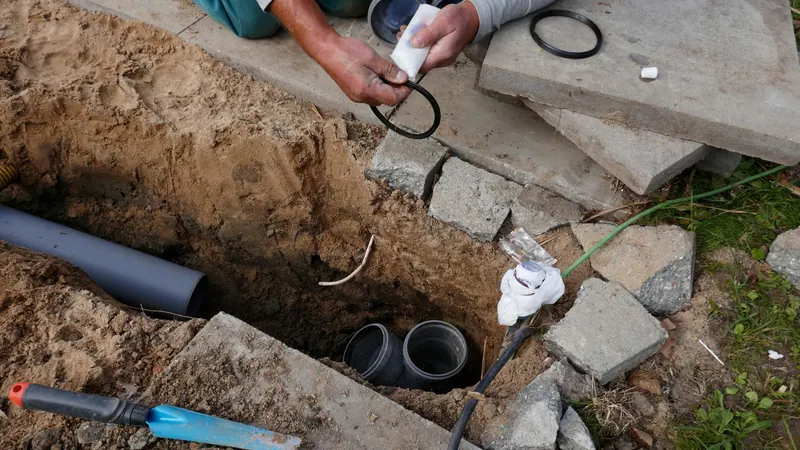
When the toilet, tub and basement floor drain all back up together, your main sewer line is blocked. We clear it from the cleanout to the street or the tank and show you the pipe on camera.
Quick answer: Main sewer line cleaning clears the single pipe that carries all wastewater from your house to the town sewer or your septic tank. A technician enters through the sewer cleanout and runs a cable machine or hydro jetter through the line to remove roots, grease, wipes and scale. In Connecticut it is the fix when several drains back up at once, and a camera inspection afterward shows what caused the clog.
Main sewer line cleaning clears the one pipe that carries all of the wastewater out of your home. In a typical Connecticut house that line starts at the cast iron stack in the basement, passes a sewer cleanout near the foundation wall, and leaves the house as a lateral that runs under the yard to the town sewer main or, in many rural towns, to a septic tank. When that pipe clogs, every fixture in the house is affected. Flushing a toilet pushes water into the tub, the washer floods the floor drain, and the basement starts to smell like sewage.
Store bought drain cleaner and a plunger will not reach a main line clog. The blockage is usually somewhere between the cleanout and the street, made of roots, grease, wipes, paper or scale, and often a mix. Fullerton Plumbing and Drain Cleaning carries heavy sectional cable machines with root cutting blades, hydro jetters for grease and sludge, and sewer cameras on the trucks. Our first job is to get your house draining again. Our second job is to find out why the line clogged so you are not calling us back next month.
We provide sewer cleaning and sewer drain cleaning for colonials, capes, ranches, three-deckers, condos, apartment buildings and commercial properties in all eight Connecticut counties. Fullerton is open 24 hours a day, 7 days a week, including nights, weekends and holidays, and we dispatch the nearest available technician. You get an upfront quote before any work starts, a live camera view of your line when we inspect it, and a clean basement when we pack up. Fullerton is fully insured and has 7 years in business.
Older Connecticut laterals are often vitrified clay laid in short sections. Roots from maples, oaks and street trees push into the joints and form thick mats. We cut them with a cable machine fitted with a root saw blade, then camera the line to see how many joints are letting roots in.
Cooking grease cools and sticks to the walls of the main line, narrowing it a little more every month until wipes and paper finally stop it. A cable punches a hole through, but hydro jetting scours the full diameter of the pipe so the line stays open longer.
So called flushable wipes, paper towels, feminine products and toys collect at the cleanout, at sags and at offset joints. We pull them free with the cable, then use the camera to confirm nothing is left hung up farther down the line toward the street.
Cast iron scales up inside as it ages, and Orangeburg pipe from the 1945 to 1970s era softens and flattens. Both shrink the opening and catch debris. Cleaning restores flow, and the camera tells you whether the pipe itself has reached the end of its life.
We locate the best access to your main line. In many Connecticut basements that is a cleanout on the stack or a Y fitting near the foundation wall. Some homes have an exterior sewer cleanout in the yard. Using the right access point makes the cleaning faster and safer for old pipe.
We run a sectional cable machine with the cutting head that fits what is in the pipe: roots, wipes, grease or scale. We work from the cleanout out toward the town main or the septic tank until water drains freely and the backup in the house drops away.
Once the line is open we run a sewer camera from the cleanout to the street or tank while you watch the live view. We look for roots at clay joints, cracked or offset pipe, bellies that hold water, scale in cast iron and flattened Orangeburg sections.
We tell you what we saw in plain language. Some lines only need a cleaning. Some need hydro jetting to fully scour the pipe. Some need a spot repair or replacement. You get an upfront quote for any next step and time to decide without pressure.
Connecticut has some of the oldest housing in the country, and many homes still drain through their original pipe. Colonials and Victorians in town centers, and three-deckers in Hartford, New Haven, Waterbury, Bridgeport and New Britain, often have cast iron stacks inside and clay or cast iron laterals outside. Clay pipe comes in short sections with a joint every few feet, and decades of frost and settling loosen those joints. Mature maples and oaks along older streets find the moisture and grow straight in. Suburban capes, ranches and split levels from the 1950s to 1970s add another problem: some were built with Orangeburg pipe, a tar paper product that slowly flattens and catches everything that passes through it.
In most Connecticut towns the property owner is responsible for the sewer lateral from the house to the town main. The Metropolitan District maintains the mains in Hartford and its member towns, and the Greater New Haven Water Pollution Control Authority does the same in New Haven, Hamden, East Haven and Woodbridge, but the pipe under your yard is yours to keep clear. Outside the cities, many homes run to a septic tank instead. Those lines still clog with grease, wipes and roots between the house and the tank, and we clean them just like a town sewer line.
Several factors shape the cost of sewer line cleaning. Access matters most: a clear basement cleanout is quicker than pulling a toilet or working through a roof vent. The length of the line from the house to the street or tank, the type of blockage, and the pipe material all play a part, since heavy roots in clay take longer than a wipes clog in PVC. Night, weekend and holiday calls, and whether you add a camera inspection or hydro jetting, also change the total. You always get an upfront quote before any work starts.
Call (518) 776-7838 for an upfront quote. We answer 24/7 and explain the price before any work starts.
No stock photos here. These are our own technicians, our own equipment and real repairs.
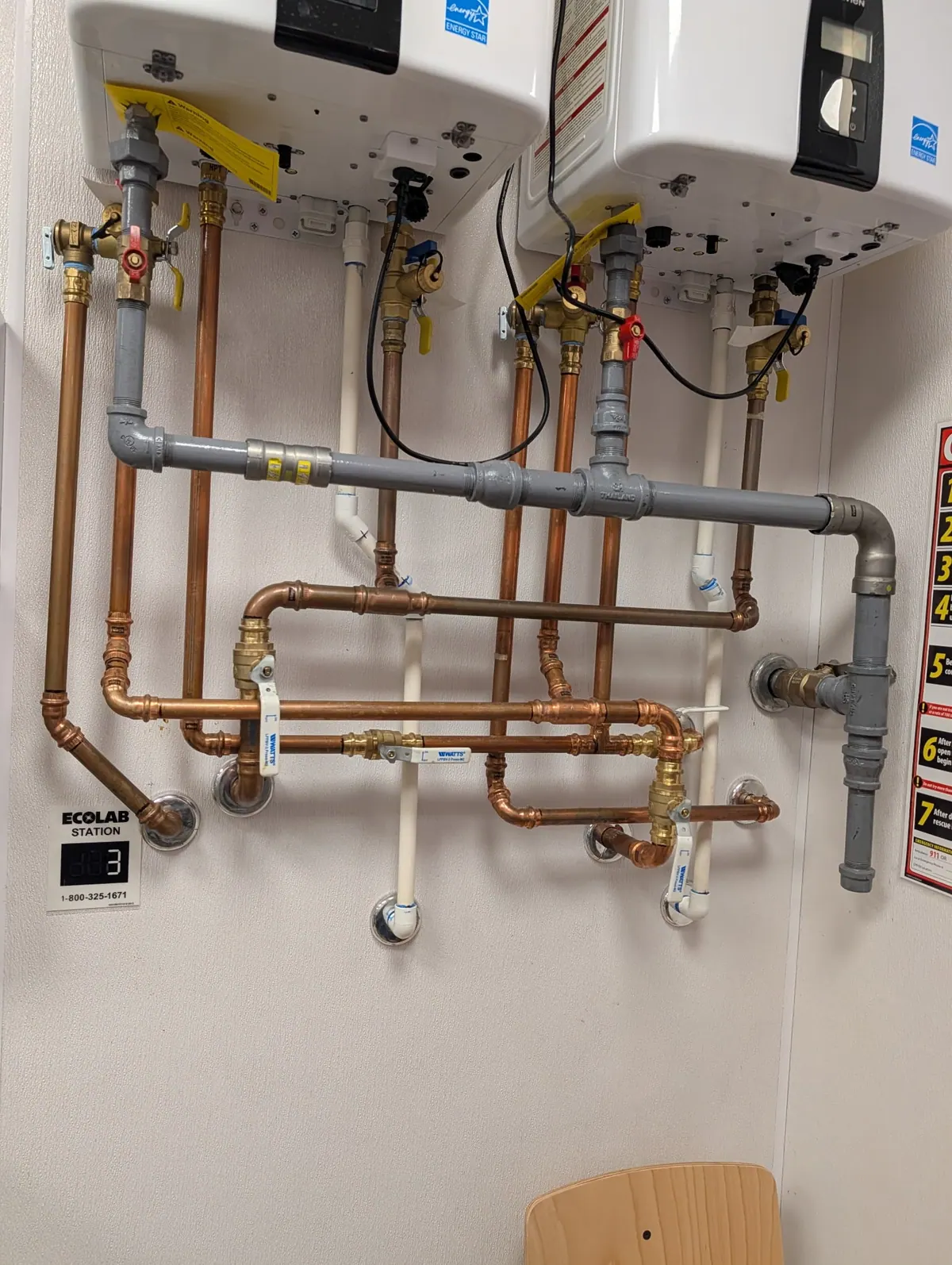


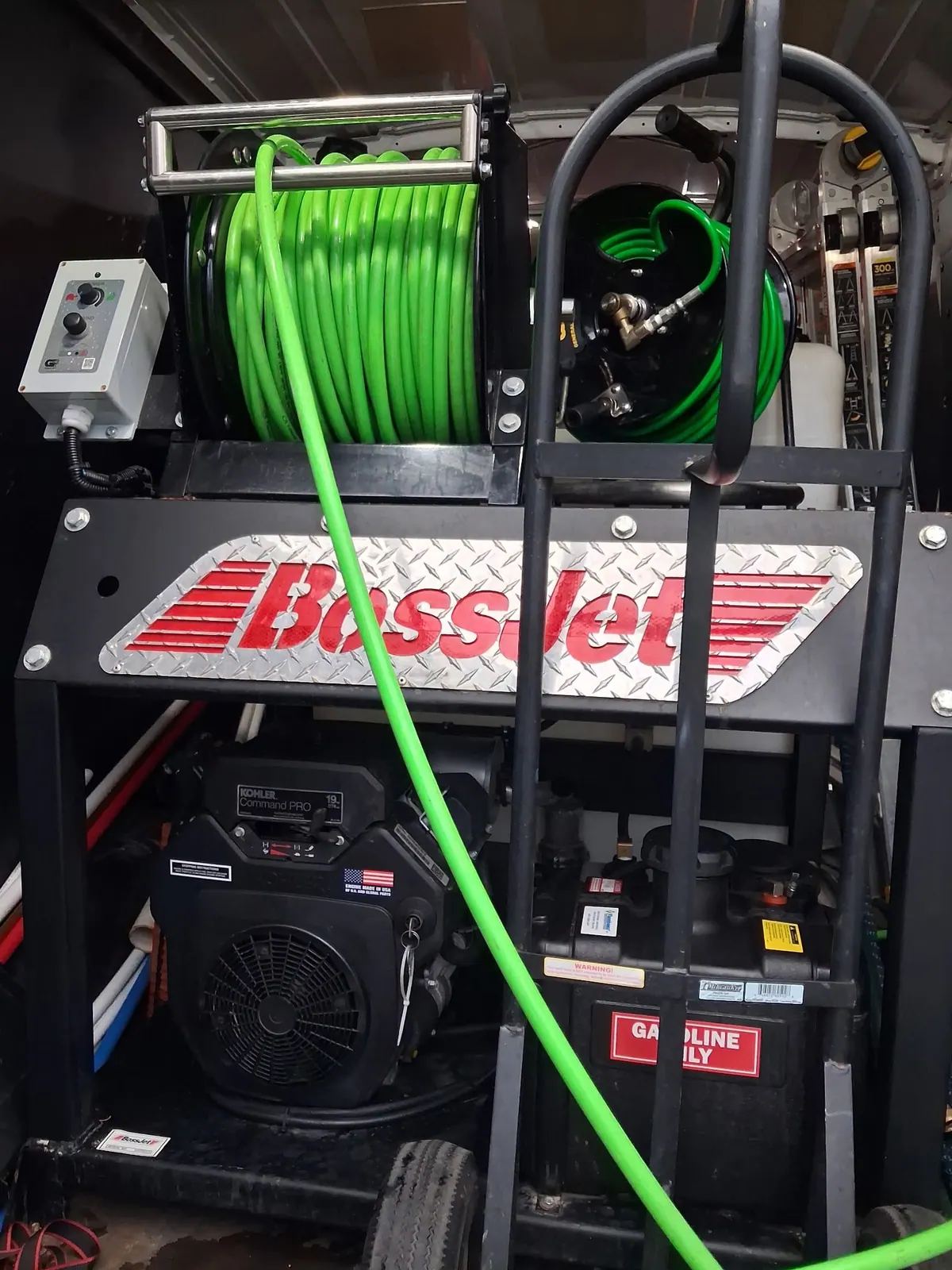
We provide main sewer line cleaning across all eight Connecticut counties.
Main sewer line cleaning clears the single pipe that carries all wastewater from your house to the town sewer or your septic tank. A technician enters through the sewer cleanout and runs a cable machine or hydro jetter through the line to remove roots, grease, wipes and scale. In Connecticut it is the fix when several drains back up at once, and a camera inspection afterward shows what caused the clog.
If only one fixture is slow, the clog is usually in that fixture's branch drain. If two or more fixtures on different floors back up together, or water appears in the basement floor drain when you flush, the main line is the likely problem. Running the washer and watching the lowest drain in the house is a quick test. Call us if water rises there.
Most Connecticut homes have the sewer cleanout in the basement, as a capped fitting on the cast iron stack or a Y near the wall facing the street. Some newer homes and slab houses have an exterior cleanout in the yard with a round cap at grade. Older homes sometimes have no usable cleanout, and we may need to go in through a toilet or vent.
In most Connecticut towns the homeowner is responsible for the lateral from the house to the town sewer main. The town or regional authority, such as the MDC around Hartford or the GNHWPCA around New Haven, maintains the main itself. If your lateral clogs, clearing it is your responsibility. Check with your local water pollution control authority for the rules in your town.
Yes. Septic homes in Litchfield, Tolland, Windham and much of Fairfield County still have a drain line between the house and the tank, and it clogs with grease, wipes and roots. We clean that line with a cable or jetter and can camera it to the tank inlet. We do not pump septic tanks, so if the tank is full you will need a septic pumping company.
A line with no history of trouble may never need routine cleaning. If your Connecticut home has clay or cast iron pipe and mature trees nearby, cleaning every one to two years usually keeps roots from closing the line. Homes that have backed up more than once should have a camera inspection to see whether maintenance or repair is the better answer.
Done correctly, no. We choose the cutting head and pressure based on the pipe material and condition, and we camera fragile lines first when we suspect Orangeburg or badly scaled cast iron. If the camera shows the pipe is collapsing, we tell you before running heavy equipment. Cleaning cannot fix broken pipe, but it will not cause a sound pipe to fail.
High pressure water jetting that scours grease, sludge, scale and roots from sewer and drain lines across Connecticut.
Hydro Jetting detailsSewer camera inspection with a live view so you see roots, cracks, sags and clogs in your Connecticut sewer line for yourself.
Sewer Camera Inspection detailsTree root removal from sewer lines with root cutting cable machines and jetting, plus camera proof that the line is clear.
Tree Root Removal detailsWe answer 24 hours a day, 7 days a week. Call and talk to a real person, or request service online and we will call you back.
Tell us what is happening. Our team usually calls back within two hours. Emergency? Call now, we answer 24/7.
Or call (518) 776-7838, 24 hours a day
