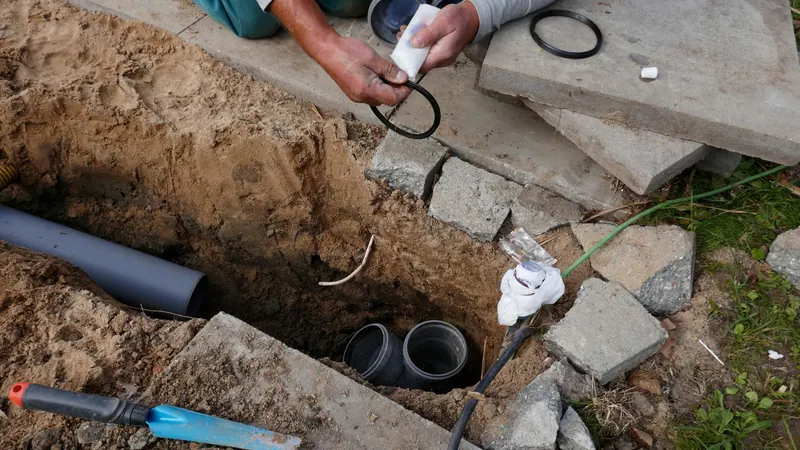
Sewer Line Repair
Sewer line repair for cracked, root damaged, sagging and collapsed laterals in Connecticut, confirmed on camera before we recommend any fix.
Sewer Line Repair details

Typical published average ranges for sewer camera and sewer scope inspections across Connecticut, what affects the price and what the camera can tell you.
Quick answer: A sewer camera inspection in Connecticut typically averages about $200 to $500, based on published averages. When the camera is run during a drain cleaning visit, the added cost is often lower. Hard access, long lines and locating the pipe from the surface can raise the price. These are typical ranges, not quotes, and Fullerton gives an upfront quote before work starts.
A sewer camera is a waterproof camera on a flexible push rod. The technician feeds it through a cleanout or drain opening and watches a live screen as it travels down the line. You see the inside of the pipe in real time: roots, cracks, offset joints, sags, grease, scale and collapsed sections.
Fullerton gives you a live view on every camera job. You watch with the technician and see exactly what is in your line before anyone recommends a fix.
Most cameras also carry a locating transmitter in the head. A handheld locator above ground picks up the signal, so the technician can mark where a problem sits and how deep it is. That matters on Connecticut lots where ledge, mature trees, driveways and patios sit over the sewer path, since it shows exactly where any repair would need to happen.
| Job | Typical average range | What changes it |
|---|---|---|
| Standalone sewer camera inspection | $200 to $500 | Through an accessible cleanout |
| Camera added to a drain cleaning | $100 to $300 | Lower because the line is already open |
| Pre purchase sewer scope | $250 to $500 | Common before buying an older home |
| Camera with pipe locating | $300 to $650 | Marks depth and location from the surface |
| Access through a toilet or roof vent | $100 to $250 added | When no usable cleanout exists |
These are typical average ranges for the area, drawn from published cost surveys. They are not a quote. Your technician gives you an upfront price after seeing the job, before any work starts.
Access is the biggest factor. An open cleanout in the basement makes for a quick inspection. If the cleanout is buried, painted over or missing, the camera may need to go in through a toilet or roof vent. Line length matters too, as does whether you need the pipe located from the surface so a repair can be planned.
Sometimes the line has to be cleared before the camera can see anything. A pipe full of standing water or a solid clog blocks the view. In that case the camera is usually paired with a drain cleaning on the same visit, which is often the better value anyway.
Older Connecticut houses have older pipe. Clay laterals often show roots at nearly every joint, especially under mature maples, oaks and street trees. Cast iron drains show heavy scale and sometimes rot along the bottom of the pipe. Postwar homes built roughly 1945 to the 1970s may have Orangeburg pipe, which flattens and blisters with age.
The camera also finds bellies, where a section of pipe has sunk and holds water, and offset joints where frost and settling have shifted the line. Each of those points to a different fix.
Inside the house, the camera can also check cast iron stacks and branch lines in older colonials and three-deckers. Scale, rot and cracks in those pipes often explain slow drains on several floors, and seeing them helps you plan before a leak shows up in a ceiling.
A camera pays for itself when it keeps you from guessing. If the same line has been cleared twice, the camera shows why. If you are buying an older Connecticut home, a sewer scope before closing tells you what you are inheriting, since in most towns the owner is responsible for the lateral to the main.
Footage is only useful if someone explains it. The technician walks you through what the camera shows and what it likely means: maintenance cleaning, root removal, jetting or a sewer line repair. If repair is needed, you get an upfront quote before any work starts, and you decide.
Ask questions while the camera is in the line. Where is the problem, how far from the house, and how deep? Is it one spot or the whole run? Those answers shape whether the fix is a small section repair, regular maintenance cleaning or something larger.
Our trucks carry sewer cameras along with drain machines and hydro jetters, so a camera can go in on the same visit as a cleaning. We are open 24/7, dispatch the nearest available technician across Connecticut, clean up after the job, are fully insured and have been in business 7 years. Call (518) 776-7838 to schedule.
If you are selling or buying, ask about timing early. Camera work fits easily into an inspection period when it is scheduled ahead, and the footage gives both sides a clear picture of the line. For homeowners with repeat clogs, pairing the camera with a cleaning on the same visit is usually the most cost effective route, since the line only has to be opened once.
Need help now? Call (518) 776-7838, we answer 24/7. Request online and our team usually calls back within two hours. Learn more about our sewer camera inspection service.
A sewer camera inspection in Connecticut typically averages about $200 to $500, based on published averages. Adding the camera during a drain cleaning often costs less. Hard access and pipe locating can push the price up. These are typical ranges, not quotes, and Fullerton gives an upfront quote before work starts.
For an older home, it is a smart step. Many Connecticut houses have clay, cast iron or Orangeburg sewer laterals, and in most towns the owner is responsible for the line to the main. A sewer scope shows roots, cracks and collapse before you close, so there are fewer surprises after you move in.
Yes. Roots are one of the most common things a camera finds in Connecticut laterals, especially clay pipe under mature trees. The live view shows where roots enter at the joints and how much of the pipe they fill, which helps decide between cutting, jetting or repair.
Yes. The camera can inspect the line between the house and the septic tank, which is where many septic home clogs happen. It shows roots, sags and broken pipe in that run. Fullerton inspects and clears that line but does not pump septic tanks or service the leach field.
Sewer line repair for cracked, root damaged, sagging and collapsed laterals in Connecticut, confirmed on camera before we recommend any fix.
Sewer Line Repair detailsSewer line cleaning that clears the main drain from your basement cleanout to the town sewer or septic tank, with camera proof.
Main Sewer Line Cleaning detailsWe answer 24 hours a day, 7 days a week. Call and talk to a real person, or request service online and we will call you back.
Tell us what is happening. Our team usually calls back within two hours. Emergency? Call now, we answer 24/7.
Or call (518) 776-7838, 24 hours a day