
Sewer Backup Service
24/7 sewer backup service that clears the blocked line, stops sewage coming into your basement and finds the cause on camera.
Sewer Backup Service details

Heavy rain, spring thaw and nor'easters push water toward the lowest drain in the house. Here is why it happens in Connecticut basements and what to do about it.
Quick answer: A Connecticut basement floor drain usually backs up in heavy rain for one of three reasons: the house sewer line is partly blocked by roots or debris, the town sewer is overloaded and pushing water back toward the house, or groundwater and runoff are overwhelming the drain. Clean, clear water points to groundwater. Dirty water or sewage smell points to the sewer line.
The basement floor drain is usually the lowest opening on your plumbing. When water can not get out to the street or to the septic tank fast enough, it rises to the lowest point first. That is why the floor drain, a basement shower or a laundry tub shows trouble before any upstairs fixture.
If the floor drain backs up only during storms, the problem is usually tied to how much water is moving outside. If it backs up when the washer drains on a dry day, the house sewer line itself is likely blocked.
Older Connecticut homes often run to the street through clay or cast iron laterals. Roots from mature maples and oaks get into clay joints and narrow the pipe. On a normal day the line keeps up. During a nor'easter, extra water from downspouts, foundation drains or the town system turns that narrow spot into a backup.
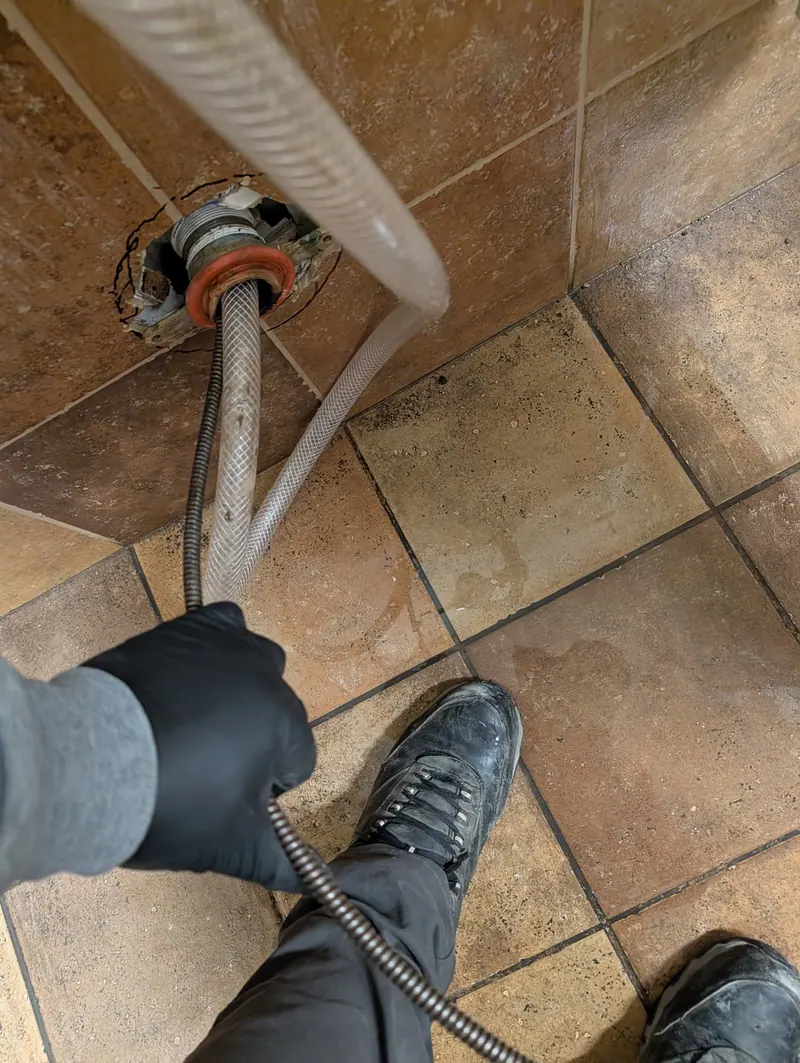
Look at what is coming up. Clear water with no smell is often groundwater or runoff, which points toward a sump pump, grading or downspout problem. Gray or brown water, toilet paper or a sewer smell means the sewer line is involved. Treat that water as contaminated: keep kids and pets away, wear gloves and boots, and do not run water upstairs until the line is checked.
Shoreline homes along Long Island Sound, from Stamford and Norwalk to Milford, New Haven and New London, can also see coastal flooding and storm surge push water toward low drains. In those cases the sewer system and the groundwater can both be part of the problem at the same time.
Stop adding water. Hold off on laundry, showers, dishwashers and flushing. Every gallon upstairs ends up on the basement floor. Move stored items off the floor and away from the drain. If water is near electrical equipment, stay out of it.
If the water is sewage, or it keeps rising, call a drain company. Fullerton is open 24 hours a day, including storm nights, and we dispatch the nearest available technician anywhere in Connecticut. Call (518) 776-7838.
The technician clears the line with a drain machine or hydro jetter, then runs a sewer camera so you can see the cause on the live view. Roots, a belly in the pipe, a broken section or a clear line that simply got overwhelmed by town flow all call for different fixes. You get an upfront quote before any work starts, and we clean up afterward.
If the camera shows the line is clear and the water was groundwater, the fix is usually on the water side: a working sump pump, extended downspouts and better grading.
Once the water is down, dry the area quickly. Run fans and a dehumidifier, pull up wet rugs and cardboard, and disinfect any surface that sewage touched. Take photos before you clean in case you need them for your records.
In homes on combined or overloaded sewers, a backwater valve lets water flow out but closes when sewer water tries to come back in. Pair that with routine cleaning on lines with known roots, and keep grease and wipes out of the drains. Pour a little water into seldom used floor drains every few weeks so the trap stays full. Before nor'easter season, check that your sump pump runs and its discharge carries water well away from the foundation.
Septic homes have their own version of this problem. A saturated leach field in spring or after a long rain can slow the whole system, and the basement drain is the first place it shows. Clearing the house line helps if it is clogged, but a waterlogged field or full tank is a job for a septic company. Fullerton clears the drains and the line to the tank, and a camera look tells you which side the problem is on.
Need help now? Call (518) 776-7838, we answer 24/7. Request online and our team usually calls back within two hours. Learn more about our basement floor drain cleaning service.
Usually because the sewer line is partly blocked or the town system is overloaded. On dry days the line keeps up. During heavy rain or a nor'easter, extra water fills the line and finds the lowest opening, your floor drain. Older combined sewers in parts of Hartford, New Haven and Bridgeport make this more likely.
A backwater valve helps when sewer water is pushing back from the street. It lets water leave the house but closes when flow reverses. It does not fix a clogged lateral or groundwater coming through the floor, so a camera inspection first shows whether a valve is the right answer for your home.
Not always. Clear water with no smell often comes from high spring groundwater or runoff, which is common across Connecticut during snowmelt and heavy rain. That points to sump pump, grading or downspout issues. Dirty water, paper or sewage smell means the sewer line is involved and needs to be cleared.
In most Connecticut towns the homeowner is responsible for the sewer lateral from the house to the town main. If the backup is caused by roots or damage in that line, clearing or repairing it is usually the owner's cost. If the town main is the cause, contact your local sewer authority.
24/7 sewer backup service that clears the blocked line, stops sewage coming into your basement and finds the cause on camera.
Sewer Backup Service detailsSump pump repair, replacement and installation for Connecticut basements facing spring thaw, nor'easters and high water tables, 24 hours a day.
Sump Pumps detailsWe answer 24 hours a day, 7 days a week. Call and talk to a real person, or request service online and we will call you back.
Tell us what is happening. Our team usually calls back within two hours. Emergency? Call now, we answer 24/7.
Or call (518) 776-7838, 24 hours a day