Clogged Drain Repair
Fast help for any clogged or stopped up drain in Connecticut, from one slow sink to a backup across the whole house.
Clogged Drain Repair details

Safe steps to clear a slow or clogged shower drain yourself, what not to pour down it, and the signs that it is time to call a drain cleaner.
Quick answer: Most clogged shower drains are hair and soap scum caught just below the drain cover. Remove the cover, pull the hair out with a plastic drain tool or a bent wire, then flush with hot water. A plunger or small hand auger handles most of the rest. If water backs up in other fixtures too, the clog is deeper and needs a professional.
Hair is the main cause. It wraps around the crossbars under the drain cover and catches soap scum, conditioner and body oil. Over weeks it turns into a dense mat that slows the drain and then stops it.
In older Connecticut homes, shower and tub drains often run through old galvanized or cast iron pipe that is rough inside. That rough surface grabs hair and soap faster, so clogs build up sooner than in newer plastic piping.
Hard water plays a part in some homes too. Many Connecticut houses on private wells have mineral rich water that leaves scale inside the drain and trap. Scale narrows the pipe, so the same amount of hair stops the drain sooner.
Start with the simplest fix. Most shower clogs sit within a few inches of the drain opening.
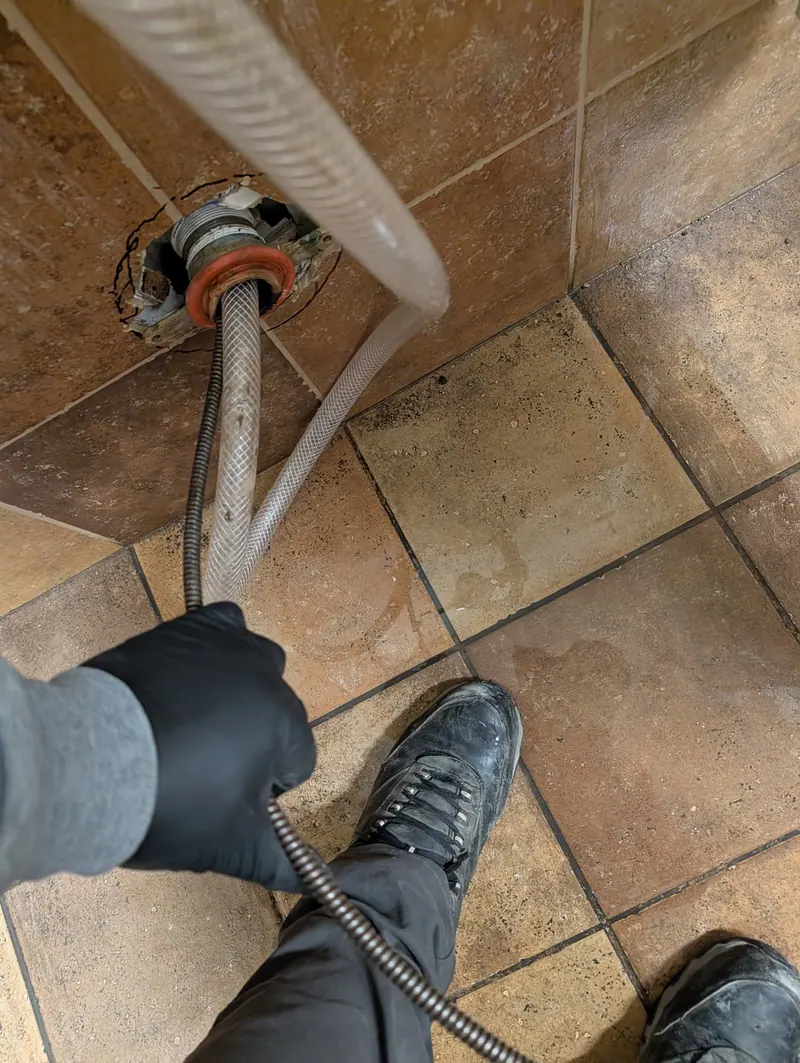
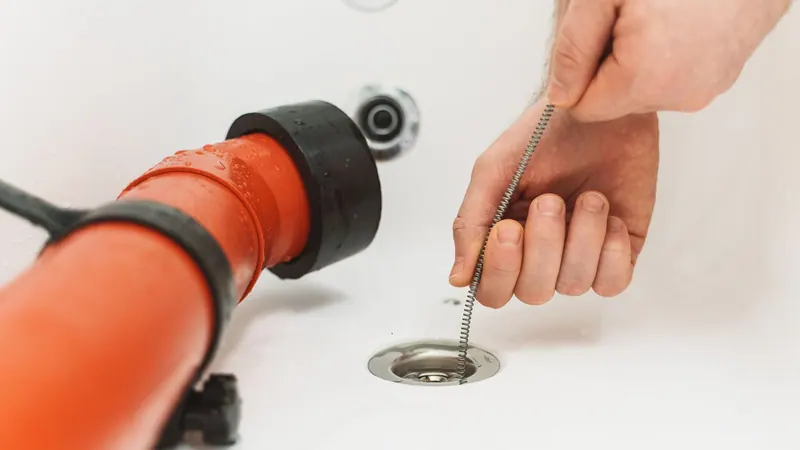
Take it slow with the auger. Feed it in while turning the handle, and when you feel resistance, keep turning to grab the clog, then pull it back out. Wipe the cable clean as it comes out. If the auger will not pass a certain point, stop there rather than forcing it.
Skip harsh chemical drain openers. They seldom dissolve a hair mat, they can sit in the trap and damage older metal pipe, and they make the job dangerous for anyone who has to open the drain afterward. Do not mix products. Do not force a large auger through a tub or shower drain, since it can scratch the finish or damage the trap.
Baking soda and vinegar will not hurt anything, but they rarely move a real hair clog. Mechanical removal works better.
Some symptoms mean the clog is not in the shower at all. When water comes up in the shower or tub as the toilet flushes or the washer drains, the blockage is usually further down in the branch line or the main sewer. Upstairs showers in three-deckers and older colonials often share a stack with other units or bathrooms, so one clog can affect several fixtures.
Old drain lines in Connecticut homes also sag, crack or lose their slope over time. A shower that drains slowly no matter how often you clean the cover may be dealing with a partly blocked or damaged pipe under the floor. A camera can confirm that without opening the bathroom.
Call when the steps above do not work, when more than one fixture is affected, or when you are not comfortable taking the drain apart. A technician can run the right size machine through the trap or branch line without damaging the fixture, and run a camera if a deeper problem is suspected.
Fullerton is open 24 hours a day, 7 days a week across Connecticut. You get an upfront quote before any work starts, and we clean up the bathroom when we are done. Call (518) 776-7838.
If you are a landlord with a three-decker or other multi unit building, a slow shower in one unit is worth checking early. Shared stacks mean a small clog can become a backup in a lower unit, and the cleanup is far more disruptive than the cleaning.
A simple hair catcher over the drain does more than anything else. Empty it after each shower. Every week or two, pull the drain cover and clear any hair that got past it. Run very hot water for a minute afterward. If you have long hair in the house, this habit alone prevents most shower clogs.
Once a year, it is worth pulling the tub or shower stopper assembly and cleaning it fully, since hair wraps around the linkage where you can not see it.
Need help now? Call (518) 776-7838, we answer 24/7. Request online and our team usually calls back within two hours. Learn more about our shower and tub drain cleaning service.
Remove the drain cover and pull the hair out with a plastic barbed drain tool or pliers. Most shower clogs sit just below the cover. Then flush with hot water. If it is still slow, use a cup plunger with a little water in the pan, then a small hand auger.
It is best to avoid them. Harsh chemicals rarely dissolve a hair mat, and they can sit in the trap and wear on older galvanized or cast iron pipe, which is common in older Connecticut homes. They also make the drain dangerous for anyone who opens it later. Mechanical removal is safer and works better.
That usually means the clog is downstream of both fixtures, in the branch line, the stack or the main sewer. Water from the toilet can not get past the blockage and comes up at the next low opening, which is often the shower or tub. Stop using water and call for drain service.
Clear hair from the drain cover every week or two, and empty a hair catcher after each shower. That simple routine prevents most clogs. If the drain still slows down often, older pipe or a deeper partial clog may be the cause, and a professional cleaning can reset the line.
Fast help for any clogged or stopped up drain in Connecticut, from one slow sink to a backup across the whole house.
Clogged Drain Repair detailsDrain snaking and rooter service across Connecticut, from hand augers for sinks to large machines for main lines and roots.
Drain Snaking and Rooter Service detailsWe answer 24 hours a day, 7 days a week. Call and talk to a real person, or request service online and we will call you back.
Tell us what is happening. Our team usually calls back within two hours. Emergency? Call now, we answer 24/7.
Or call (518) 776-7838, 24 hours a day